The Role of Performance Management Software in Enhancing Employee Engagement

Employee engagement is a vital component of any successful organization. It’s the art of ensuring that employees are engaged and motivated to give their best in every task they undertake.

Performance Management Software is one of the most efficient methods to accomplish this. This software is designed to improve employee performance, productivity, and engagement by streamlining the performance review process and setting clear goals and expectations.

In this blog post, we’ll explore the role of performance management software in enhancing employee engagement.

Continue reading

Sample of HR Programs and Action Plan: Creating an Effective HR Action Plan for Career Growth Programs

The success of any company heavily depends on its employees. The growth and development of employees benefit not only the individuals but also the organization as a whole.

Employee development programs help in increasing employee engagement, productivity, and loyalty while also boosting the organization’s performance. However, creating an effective HR action plan for career growth programs can be a daunting task for many companies.

Read our article about HR templates here.

This post will discuss the power of employee development and how it can benefit your organization. It will also provide you with actionable steps to create an effective HR action plan for career growth programs that align with your organization’s goals and objectives.

Continue reading

How to Use AI in HR Management

In recent years, businesses have been transformed by the innovative technology of Artificial Intelligence (AI). The potential to revolutionize HR management practices makes its integration into the Human Resources (HR) field a game-changer.

AI provides a variety of solutions that allow HR managers to automate and streamline complex HR functions such as recruitment, employee engagement, training and development, performance evaluation, and compliance. Exploring how AI can optimize workflows, reduce costs, improve employee experiences, and enhance overall organizational effectiveness in HR management.

Continue reading

Example of Prompts in ChatGPT for HR Management

As the world continues to evolve and businesses become more complex, HR management has become more critical than ever before.

With the advent of new technologies, HR managers can now streamline their work by automating certain processes. One such technology that has been gaining popularity among HR managers is ChatGPT. This AI chatbot is designed to help HR departments handle the various processes involved in managing a workforce, from onboarding to performance management and everything in between.

This post will explore some examples of the prompts available in ChatGPT for HR management. We’ll look at how these prompts may be utilized to increase HR management efficiency and effectiveness while also improving the overall employee experience.

Continue reading

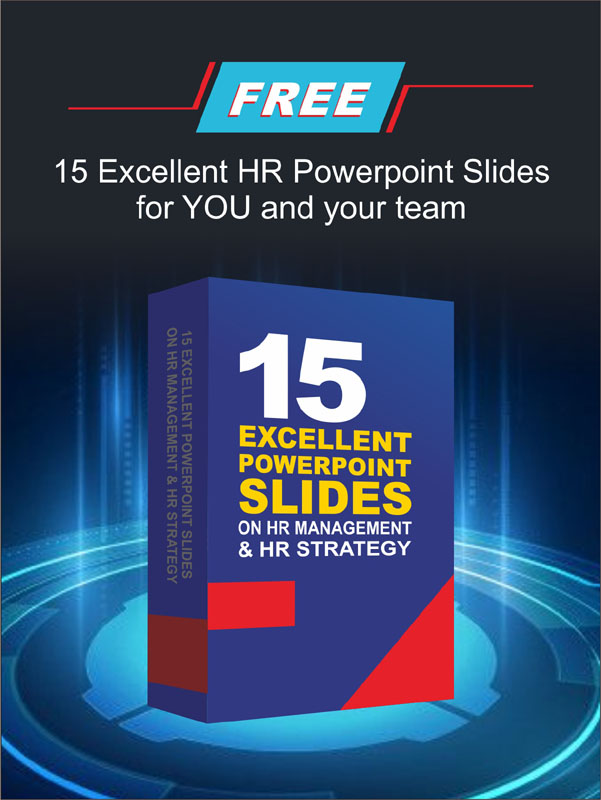
Free – Excellent PPT Slides on HR Management and HR Strategy

Are you tired of spending hours creating HR presentation slides from scratch? Are you struggling to develop your employees and keep their skills up to date with the latest HR trends?

If you answered yes to any of these questions, you may not have the time, knowledge, or skills required to create great HR slides. Don’t worry – we have the perfect solution for you.

FREE Excellent HR Powerpoint Slides for YOU and your team.

These brilliant HR PPT Slides are the perfect solution for HR Managers who want to save time, increase their knowledge and skills, and develop their employees effectively.

These amazing HR Slides are designed to provide you with everything you need to create amazing HR presentations and develop your employees’ skills.

All slides are designed in powerpoint files (ppt) so that you can modify and immediately use for your own learning process.

There are 15 excellent HR presentation topics :

1. Competency-based HR Management
2. HR Scorecard
3. Principles of HR Management
4. Measuring ROI of Training
5. Change Management

6. Diagnosing Organizational Effectiveness
7. Good to Great
8. Coaching for Optimal Performance
9. Balanced Scorecard
10. Career Management

11. Communication Skills
12. Emotional Intelligence
13. Developing Leadership Skills
14. Presentation Skills for HR Managers

15. AI STRATEGY for HR Managers

You can download these amazing HR presentation slides for free. Please enter your email address to download these brilliant HR PPT Slides.

We will instantly send the powerpoint files to your email address. If you do not see the email in your inbox, please check your “promotion” folder.


Your subscription could not be saved. Please try again.


Your subscription has been successful.


HR Tools And Templates To Enhance HR Management Process Performance

Are you a Human Resources professional or an organization looking to improve the efficacy of your HR management process? Are you seeking tools and templates to streamline and enhance performance for your team? Don’t worry – the wide range of HR tools and templates available can make all the difference in ensuring optimal results when managing personnel within your organization. 

Let’s explore some of these incredible resources and how to leverage them for improved process performance. Whether you’re looking for insightful analytics into recruitment, employee onboarding management processes, effective training programs, or data-driven insights into personnel performance–HR tools are plentiful to help take efficiency throughout every stage of managing staff. Let’s dive right in!
Continue reading

7 Performance Management Principles Every Company Should Know About

Companies need efficient performance management systems to boost productivity and morale. It may boost output, morale, and retention rates and add to an organization’s bottom line.

Performance management principles provide a framework for making and using such systems. They help organizations set clear goals, measure employee performance, and give regular feedback and opportunities for growth.

By adhering to these principles, firms may foster a culture of continuous development in which people are rewarded for their accomplishments and provided the resources they need to further their careers.

This blog will go into business performance management principles to better understand how to implement these practices in our businesses. Have a look, shall we?

What is Performance Management?

The term “performance management” describes the process of defining and communicating high standards for work, as well as monitoring and adjusting work conditions to meet those standards. Staff development is essential to human resource management since it directly impacts business performance via increased output, dedication, and happiness in the workplace.

7 Key Performance Management Principles For Your Business

Clear Goals and Expectations:

One of the fundamental tenets of performance management is the establishment of clear objectives and standards. It also describes providing staff with well-defined objectives and high standards to strive for.

When workers have clear goals and guidelines, they are more likely to achieve them. They should be SMART, which means they should be clear, measurable, attainable, relevant, and time-bound. They should also align with the organization’s overall goals and objectives.

When people know what’s at stake and what’s expected of them, they can put in the time and effort necessary to succeed. In addition to helping managers determine whether or not their staff is performing as expected, objectives serve as the foundation for conducting performance reviews.

Regular Communication:

Managers and staff should maintain consistent lines of communication as part of good business performance management. Having open lines of communication between managers and workers is crucial for effective performance management because it facilitates the setting of reasonable goals, the delivery of constructive criticism and guidance, and the development of mutual respect and trust.

Frequent communication entails a continuing conversation between management and workers about performance objectives, progress, and any possible problems or concerns. This may be done via periodic check-ins or reviews, during which managers share feedback on employee performance and brainstorm methods to enhance it.

Good communication is vital because it helps workers connect with the aims and objectives of the business, comprehend their expectations of them, and feel appreciated and supported. Managers might also use this time to discuss any concerns about an employee’s performance.

Performance Metrics and Data:

One of the cornerstones of effective management is the collection, analysis, and utilization of metrics and data to assess individual and team performance regarding corporate objectives.

Metrics and statistics on employees’ performance are used to lay out objectives, set attainable goals, track development, and offer feedback. Managers may use performance data to identify problems and take informed actions to boost productivity.

Performance management may use various data and metrics of an organization’s performance. Productivity, quality, customer happiness, staff engagement, and financial performance are all examples of such indicators.

Metrics and statistics on employee performance may assist in boosting productivity by outlining clear objectives and offering constructive criticism. Managers may use it to prioritize resources better and allocate budgets based on data.

Continuous Improvement:

Employee performance and organizational procedures are two areas that may benefit from a continuous effort to discover and implement improvements.

The principle of continuous improvement is that to stay competitive and accomplish their long-term goals, businesses should constantly look for ways to enhance their processes and performance.

Establishing a constant learning and development culture is essential for businesses that aim for continual progress. This may be done in several ways, including by offering regular training and development opportunities, soliciting comments and ideas for improvement, and fostering an atmosphere that welcomes and rewards risk-taking and new approaches.

Data and metrics must be used as part of a continuous improvement process to fulfil improvements and targets. Managers may enhance performance by collecting and evaluating data on performance and procedures to identify opportunities for change.

Employee Development:

One of the tenets of performance management is “employee development,” which entails giving workers chances to improve themselves and their careers.

Since it allows workers to learn new things and become more valuable, employee development is essential to a company’s progress. It improves retention and decreases turnover by keeping workers interested and motivated.

Training courses, one-on-one mentorship, job swaps, and challenging new responsibilities are examples of employee development activities. The idea is to give workers room to develop professionally and encourage them to take charge of their growth.

Staff training and improvement go hand in hand. It is the responsibility of employers to help their staff members learn new things and grow professionally. Growth opportunities may come through training, mentorship, and work rotations.

Recognition and Reward:

Performance management is based on the ideas of recognition and reward. Employees’ efforts are recognized and rewarded for the value they provide to the company.

Positive behaviors and high performance may be reinforced, and the morale and motivation of employees can be boosted via proper recognition and reward. When publicly thanked for their efforts, employees are more motivated to give their all and contribute to the company’s success.

Businesses can make the workplace more positive and productive by recognizing and rewarding employees for their hard work. This can boost organizational efficiency, raise morale, and decrease turnover.

Fairness and  Transparency:

Integral to fostering trust, credibility, and employee engagement, performance management rests on the twin pillars of fairness and openness.

Regarding employee performance, fairness is giving everyone a fair shot at the top, regardless of their background or credentials. This necessitates using quantifiable criteria in employee performance reviews and the provision of constructive criticism and guidance in the form of feedback and coaching.

Regarding performance management, transparency means being up-front and honest with workers about everything from performance standards and assessment methodologies to the repercussions of poor performance. It helps ensure workers know the criteria for assessing their performance and the methods used to reward and acknowledge them for their efforts.

Increased employee engagement, motivation, and productivity may result from a performance management system that is both fair and transparent.

Key Takeaway:

In conclusion, businesses can only successfully manage employee performance or reach their goals by adhering to performance management principles.

With these guidelines, businesses inspire their staff, boost output, and achieve their goals. Trust and credibility among staff members are also bolstered, which is crucial for the company’s long-term success.

These practices can help businesses foster a high-performance culture that benefits workers and management.